Kia PV5 Cargo – First Drive
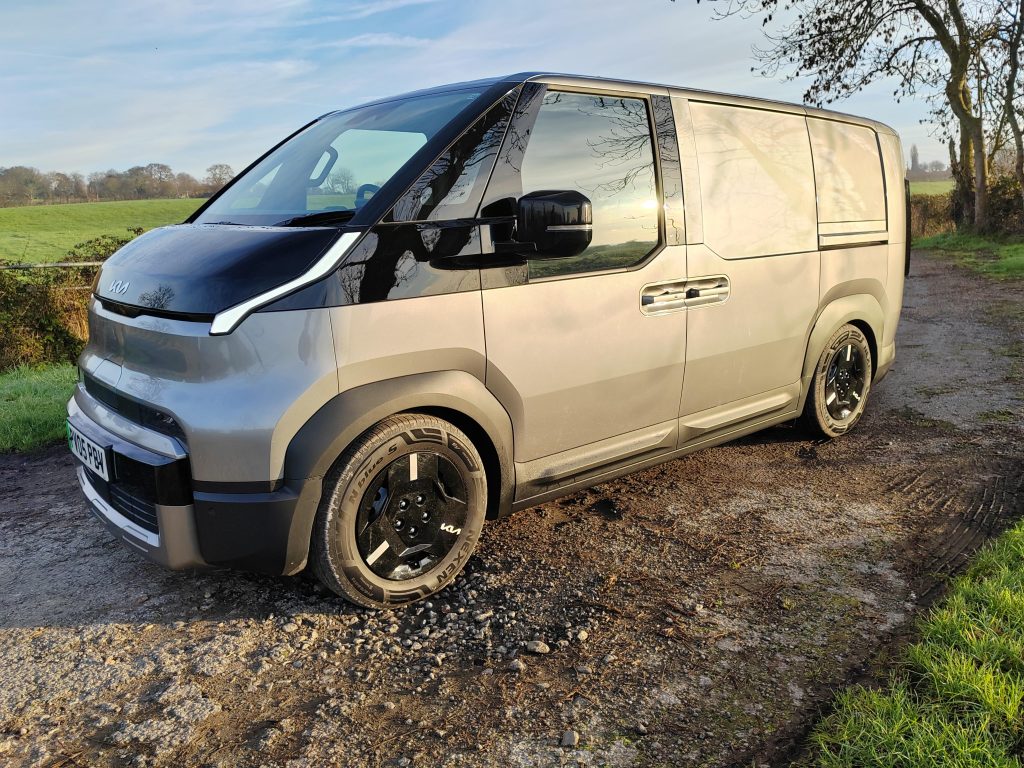
The Kia PV5. The term ‘disrupter’ is often misused, but, the new van from Kia quite possibly justifies this moniker. Why? Because the manufacturer has built an enviable reputation for building quality, highly specified passenger cars and has been ahead of many competitors when it comes to EV technology. All this is being segued into this launch into the UK LCV market.
Just before Christmas, I spent some time on the road with the van at the first UK media drive event. I’ll do a full review when I’m able to borrow a press vehicle for a longer period but, the experience was certainly sufficient for me to jot down some initial impressions.
A quick overview of the range – thankfully Kia has kept this nice and simple (I’ll stick to the Cargo versions although passenger variants are available). You’ve a choice of ‘standard range’ with its 51.5kWh battery, 120bhp power output and WLTP Combined range of 184 miles, or ‘long range’ which comes with a 71.2kWh battery, 160bhp and a 258 mile range. Payloads are 790kg and 690kg respectively. Two trim levels, ‘Essential’ which has most of the bits and bobs we’ve come to expect, and ‘Plus’ adding a few touches.
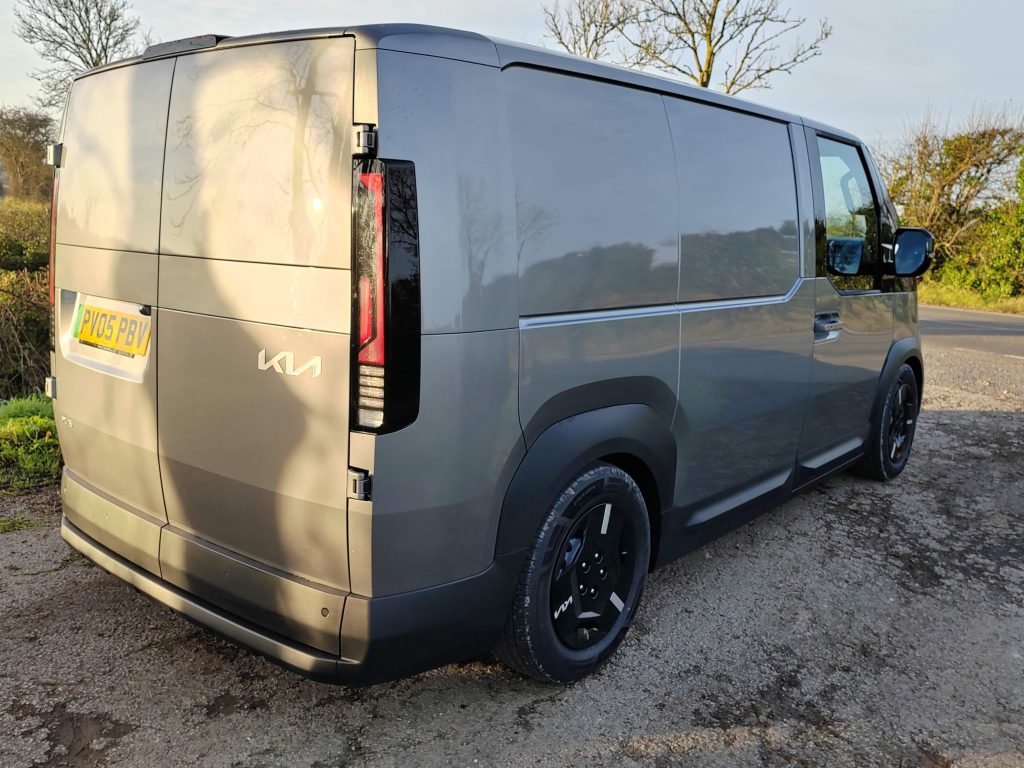
Looks are subjective, but I think the PV5 looks great. How the exterior will stand up to all the knocks and scrapes a working van tends to suffer remains to be seen but, the van makes the Volkswagen ID Buzz Cargo, probably it’s only realistic competitor look almost dated in comparison.
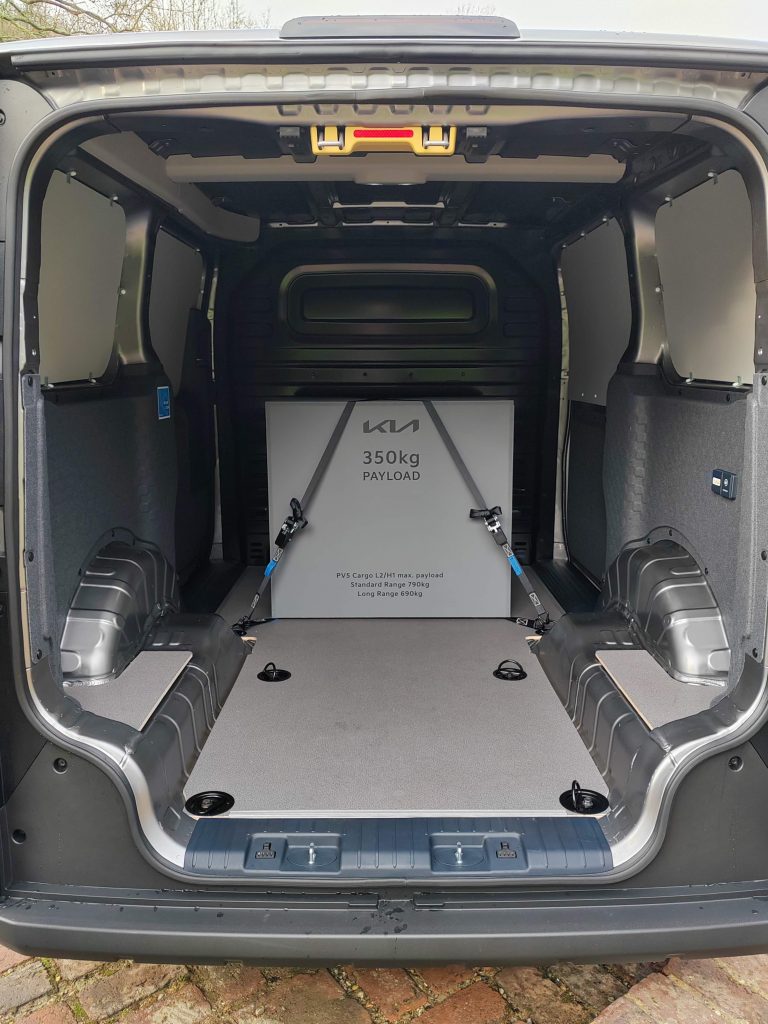
The loadbay is accessed in the traditional twin rear and single (twin an option) side loading doors, and immediately noticeable is the low floor height, making loading and unloading so much easier. A penalty of this is that the wheelarches partially extend to the rear of the van to accommodate the suspension.
Jumping into the cab, it’s clear that this is a small van rather than a medium, there being no room for a dual passenger seat. The driver is presented with a digital instrument panel and a 12.9” multimedia screen, both of which are clear and easy to customise.
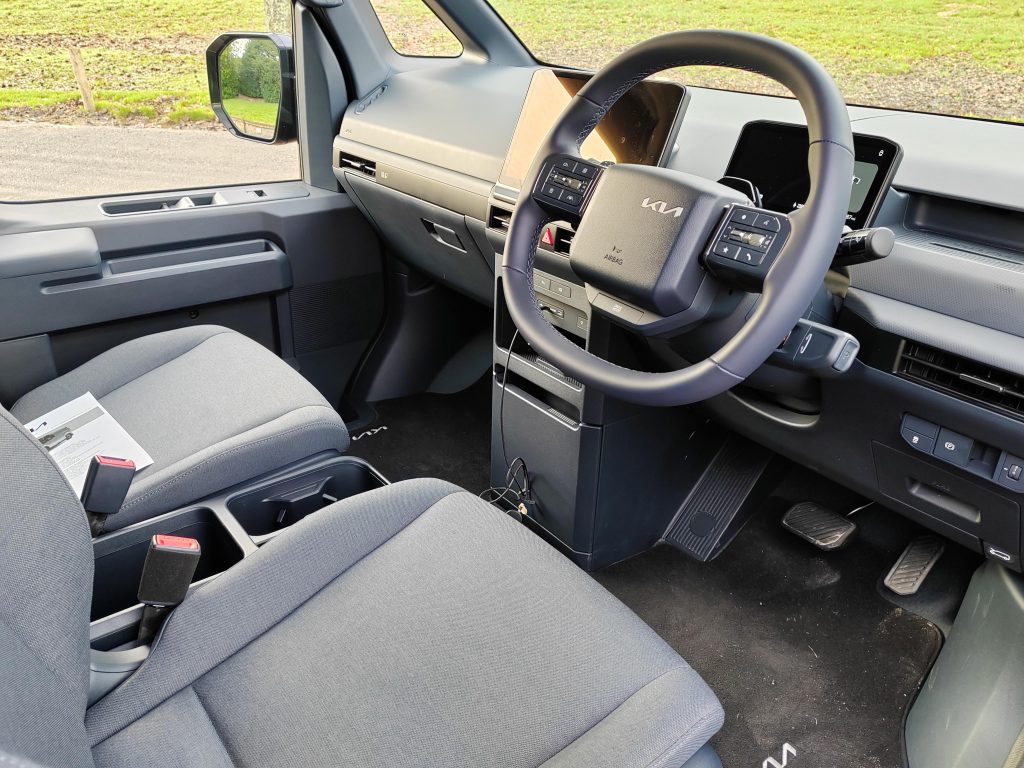
I drove both the short and long range versions (in that order) and, from a performance perspective, despite a 33% increase in power, on the road there didn’t feel to be much difference, potentially because in an electric van the maximum torque is available immediately. The test vans all had 350kg of payload in the rear (much appreciated by us reviewers) and performance was more than adequate in the short range, just a little bit more ‘ooomph’ evident in the 160hp van.
The van handled well, visibility from the comfortable driving position was good and, generally, noise levels were, as you’d expect, low. However… In all three vehicles I drove, there was a ‘boom’ type resonance evident which appeared to be coming through the suspension – this could be heard on all but the very smoothest of roads. After one long drive, I returned with a mild headache and this would be a concern if I was considering buying one. In fairness, other reviewers I spoke to hadn’t noticed this.
Build quality throughout seems to be excellent, as one would expect given the reputation the manufacturer already enjoys.
Conclusion? An excellent first step into the UK van market for Kia, it’s a van I found hard to fault. Pitched against the Volkswagen, the cab environment felt a little cheaper, but, with Kia’s extremely aggressive pricing putting the PV5 from £27,695 compared to the Buzz Cargo at £36,905. a £9207 saving can’t be ignored.