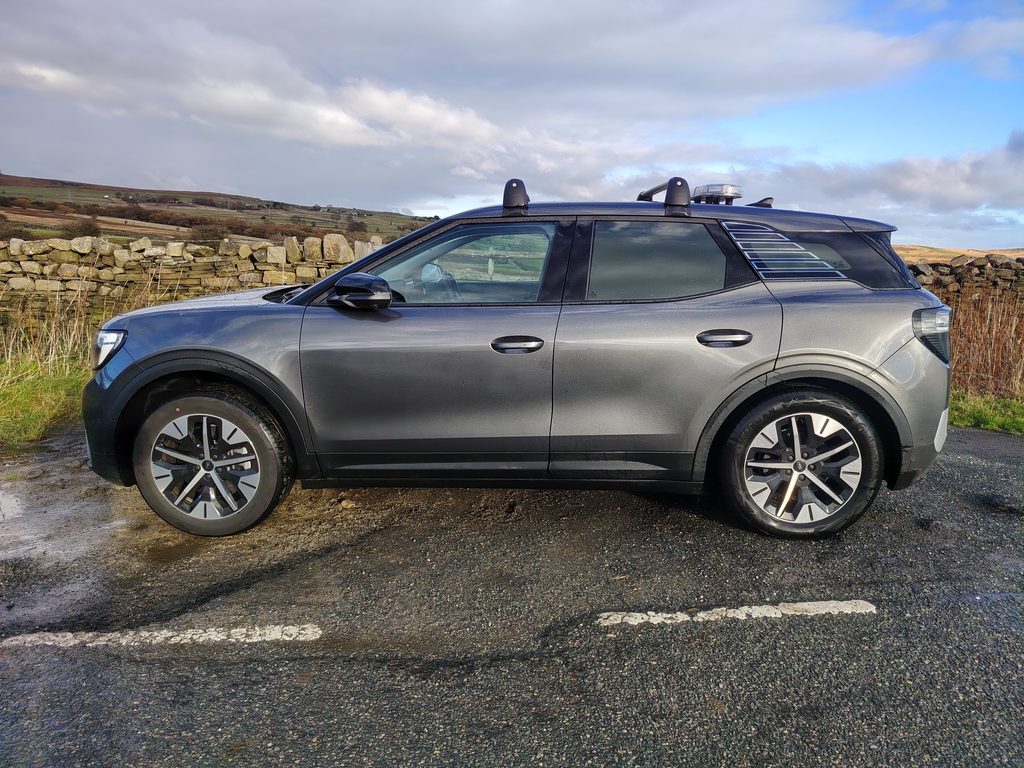
Ford Explorer Van review
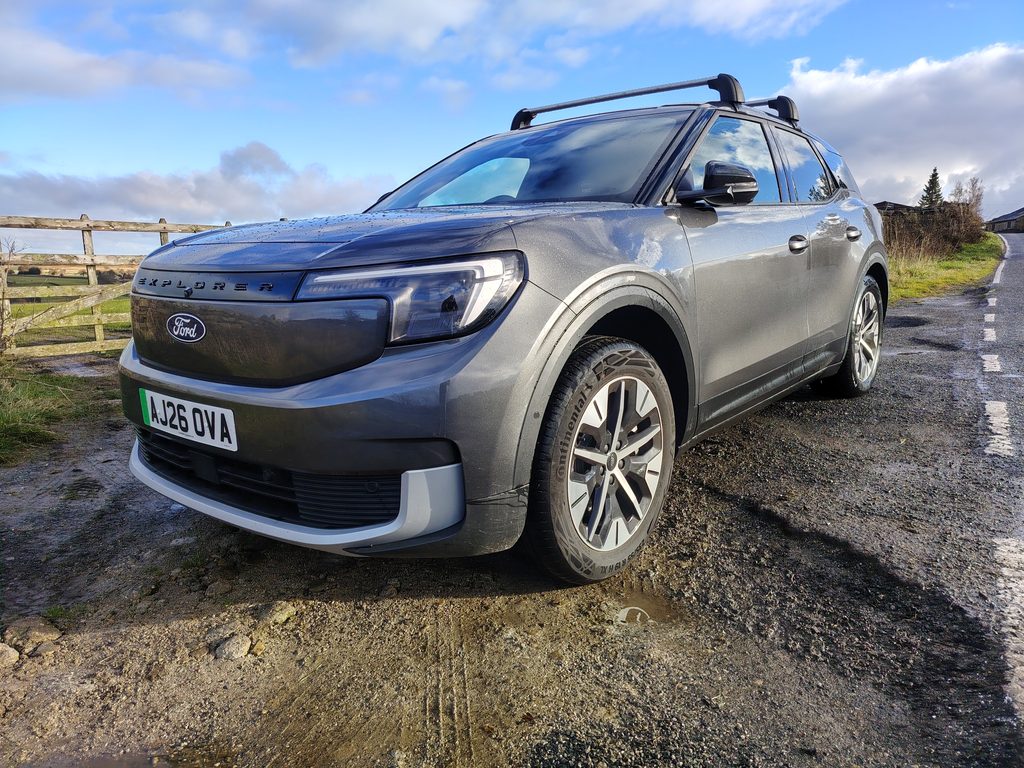
There’s been a resurgence of the car derived van in the last year or two. Car manufacturers have realised that with just a couple of modifications they can potentially open up their SUV to a totally new market. The target customer profile is fleet operators who need to move both people and their tools between multiple sites, often covering considerable distances in a working day. A typical application might be a service engineer who needs more loadspace than available in a car but where a conventional van might just be overkill. There are taxation benefits too, potentially for both operator and driver.
The Explorer Van is based on the passenger car of the same name, an all-electric large SUV. Under the skin, due to the commercial arrangement between Ford and Volkswagen drivers of the VW ID-Buzz cargo and the ID4 car will find plenty of similarities, the Explorer being built on the same platform.
The Explorer Van project was developed by Ford Pro Special Vehicles team with the conversion being completed in-house at its Dagenham facility,the development process taking just six months.
Drivetrains and Charging
The Explorer Van is offered with two electric drivetrain options. The entry-level model has a rear-mounted electric motor producing 210kW (286PS) and 545Nm of torque. Those wanting additional traction can choose the all-wheel-drive version. This adds a second electric motor to the front axle, increasing total output to 250kW (340PS) and torque to 679Nm.
Ford quotes a range of up to 374 miles (602km) on the WLTP combined cycle for the rear-wheel-drive version but, as always, the official figure needs to be treated with some caution. Around 300 miles is a more realistic expectation in everyday use, with motorway speeds, cold weather and additional payload all having an impact.
The van supports DC rapid charging at up to 135kW, allowing a 10-80% recharge in approximately 25 minutes under suitable conditions. For overnight charging, an 11kW AC connection is supported, whilst a conventional 7kW home or workplace wallbox will take approximately 11 hours to complete a full charge.
Loadspace and the Conversion
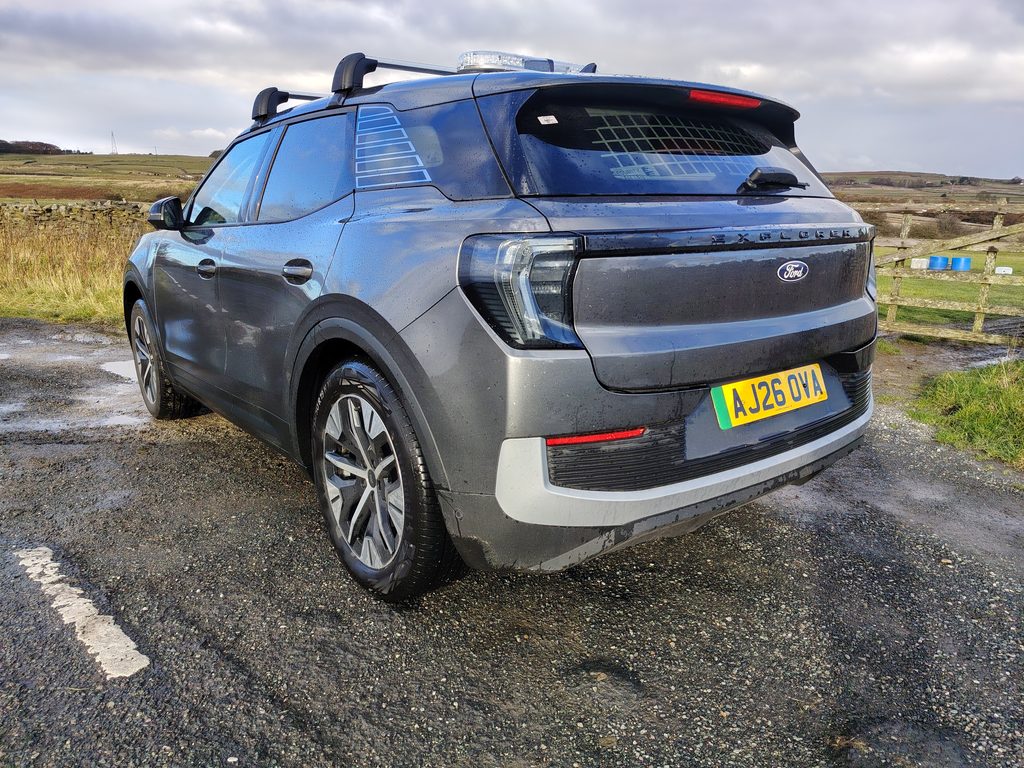
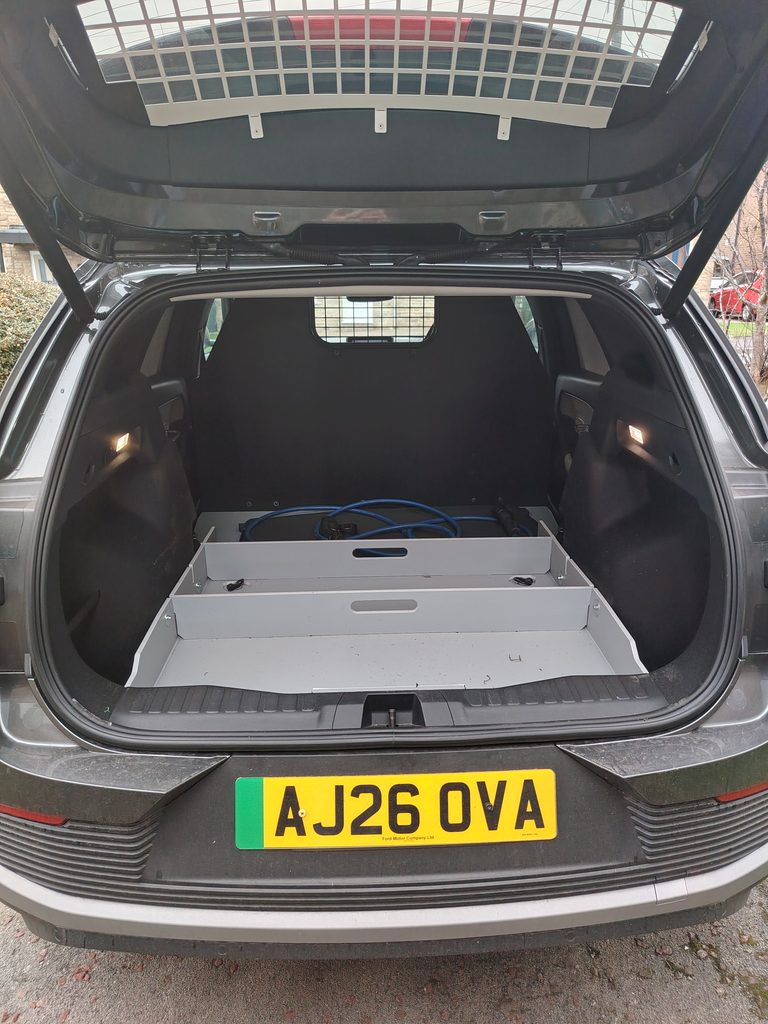
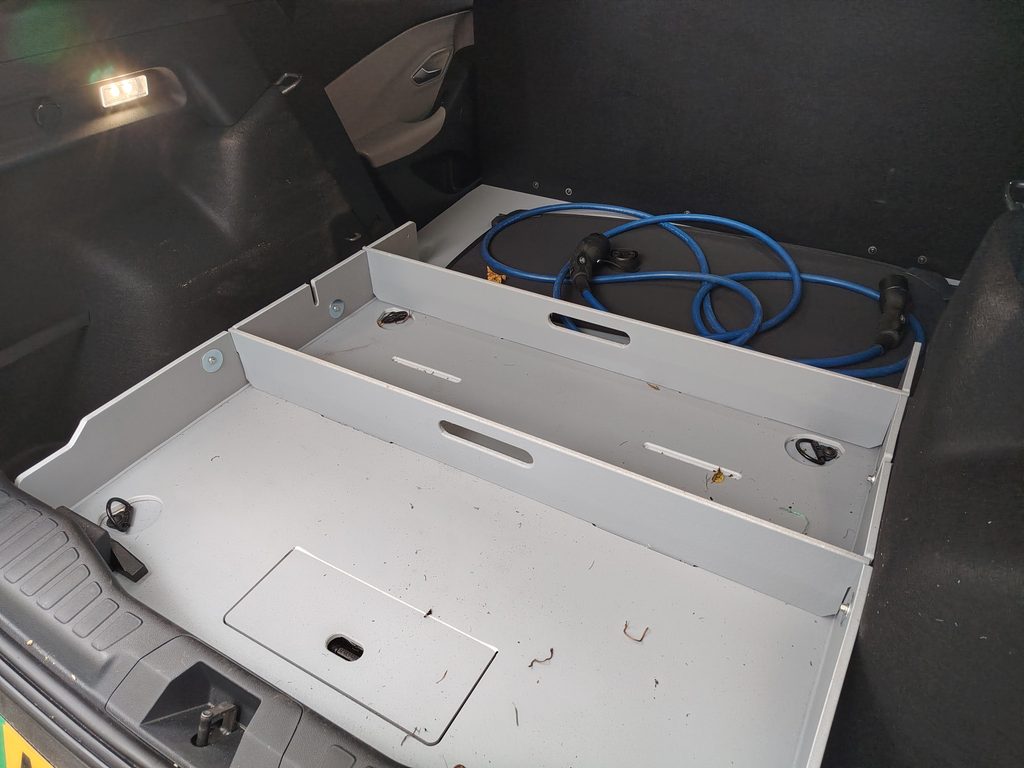
Let’s be realistic: the Explorer Van isn’t going to compete with a conventional small panel van when it comes to carrying capacity, but that’s not the idea behind the concept. The rear seats are removed and replaced with a purpose-designed load compartment, separated from the front occupants by a full-height bulkhead. There’s a lightweight but durable flat load floor, handy movable load dividers, multiple lashing points and panelled rear windows.
The load compartment provides approximately 1.25 cubic metres of capacity, sufficient for tools, diagnostic equipment, laptops, spare parts and other relatively compact items. Maximum payload is quoted at up to 650kg. The rear-wheel-drive version is capable of towing up to 1,000kg and the AWD model up to 1,200kg.
The movable dividers are a particularly useful feature, allowing smaller items to be separated and secured rather than sliding around in the back. There are also several lashing points for securing heavier equipment. Access is through tailgate or the two rear passenger doors, the latter providing a useful alternative when retrieving smaller items. Security may be a potential issue, although the rear side windows are panelled over inside the van, the glass remains in place underneath. The optional rear window mesh provides some security but customers may well consider adding some additional protection if carrying valuable tools or equipment.
There are several optional equipment packs available, the Wheel Pack replaces the standard alloy wheels with 19-inch steel wheels, complete with all-weather tyres and wheel nut indicators. The Welfare Pack adds a first-aid kit, eyewash and hand-sanitiser station, while the Utility Pack includes additional storage, a roof rack, rear window security mesh, hard-wearing seat covers and rubber floor mats.
For businesses working on highways or construction sites, the Commercial Pack (fitted to the test van) adds an amber lightbar, tailgate work lamp and tailgate beacons.
The Cab
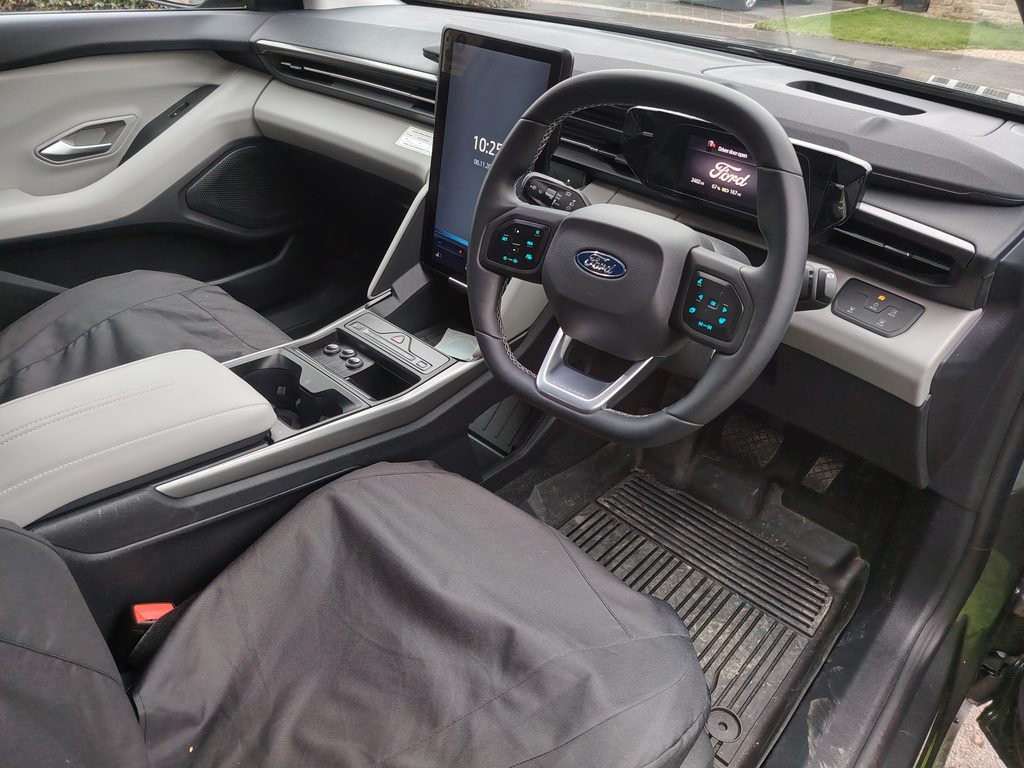
One of the biggest attractions of the Explorer Van is that its cabin remains virtually unchanged from the passenger SUV. There are two comfortable front seats, a modern dash and a distinctly upmarket feel that puts it in a different league to the majority of conventional vans.
The centrepiece is a large 14.6-inch SYNC Move touchscreen, which can be adjusted vertically to reveal a hidden storage compartment behind it. There’s also a 5.3-inch digital instrument display directly in front of the driver.
The cabin offers plenty of storage, including Ford’s 17-litre MegaConsole and a concealed, lockable My Private Locker for valuables. Wireless smartphone connectivity, Apple CarPlay and Android Auto connectivity are standard.
On The Road
This review is intended to focus on the van aspects of the Explorer, so those wanting a detailed review of the driving experience and the functionality of the cab may be best searching out one of the many reviews of the Explorer car. However, the van is extremely rapid from a standing start and the performance will not disappoint. It handles well, is eerily quiet as with most electric vans, and is a pleasure to drive. Careful use of the regenerative braking will see the remaining range increase, something that is particularly satisfying.
From a practical perspective, the central touchscreen’s positioning can require the driver to turn their heads a little more than is ideal, and Its reflective surface can also make it difficult to read in bright sunlight. Sadly, the heating and ventilation controls are located on the screen, an unwelcome cost saving initiative which is distracting to the driver. The touch-sensitive steering wheel controls aren’t particularly user friendly, either.
The biggest adjustment that those more accustomed to driving a car will have to make is likely to be the restricted visibility through the obscured rear side windows. The substantial rear window and reversing camera help compensate, but drivers will need to get used to coping with unfamiliar blind spots.
Conclusion
The Ford Explorer Van isn’t intended to replace a conventional small van, and judging it against one on load volume alone would rather miss the point.
Its appeal is to businesses that spend more time travelling between jobs than loading and unloading equipment. For these operators, the combination of a potentially 300-mile real-world range, excellent performance, rapid charging and a comfortable passenger-car interior makes considerable sense. Where Ford has scored here is the thought that has gone into the conversion. This isn’t a car with the seats removed and sticky film placed over the rear side windows, it’s more than that.
A niche market sector? Yes, it is. But for those where this type of van would work, it’s an excellent proposition. It’s not cheap but, for those who operate a single badge fleet it gives them another potential type of vehicle to add to their portfolio.