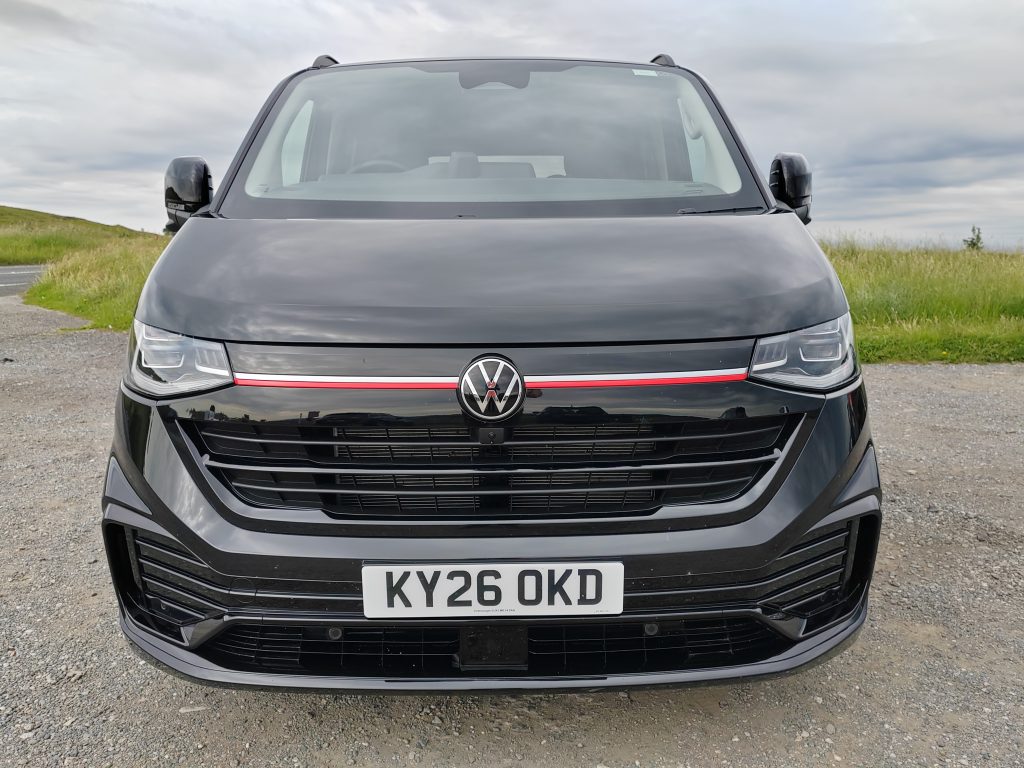
Volkswagen Transporter Kombi Sportline Review
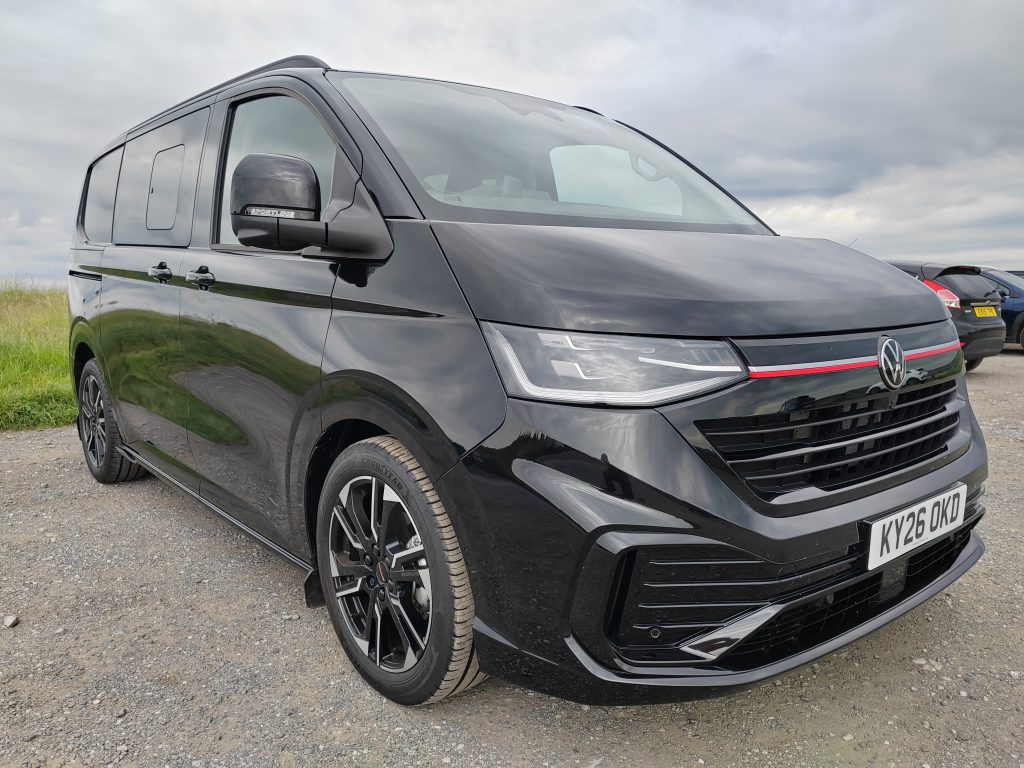
It’s fair to say that there was, and still is some indignation in the Transporter enthusiast corner that, in its opinion Volkswagen has ‘sold out’. The heritage of the van which started with the ‘Bulli’ in the 1960’s is no longer there due to a commercial agreement with Ford, meaning that the latest incarnation of Transporter (it’s not a T7) is essentially a rebranded Ford Transit Custom.
Platform sharing is commonplace in today’s marketplace. The costs of developing and building a new van are prohibitive so, the prospect of working with a competitor with costs being borne by both parties must be more than tempting. To add to the pain being felt by the VW scene, Volkswagen didn’t immediately introduce a Sportline version. A year or so after launch, this has been remedied.
I’ve reviewed the Transporter panel van previously (link here), so, rather than repeat things do take a look there for some of the more conventional detail, here we’ll concentrate on the Sportline enhancements and the Kombi package.
The Range
It’s fairly straight forward. There’s just one diesel engine offered for the Sportline, the 170PS unit as fitted to the Transit Custom (and yes, it has that notorious wet timing belt), and as standard it’s coupled to an 8-speed automatic gearbox. Your only other choices are panel van or Kombi, and short or long wheelbase. With the electric version, those options are the same but there’s either a 218PS or 286PS motor to choose from.
Sportline – What do you get?
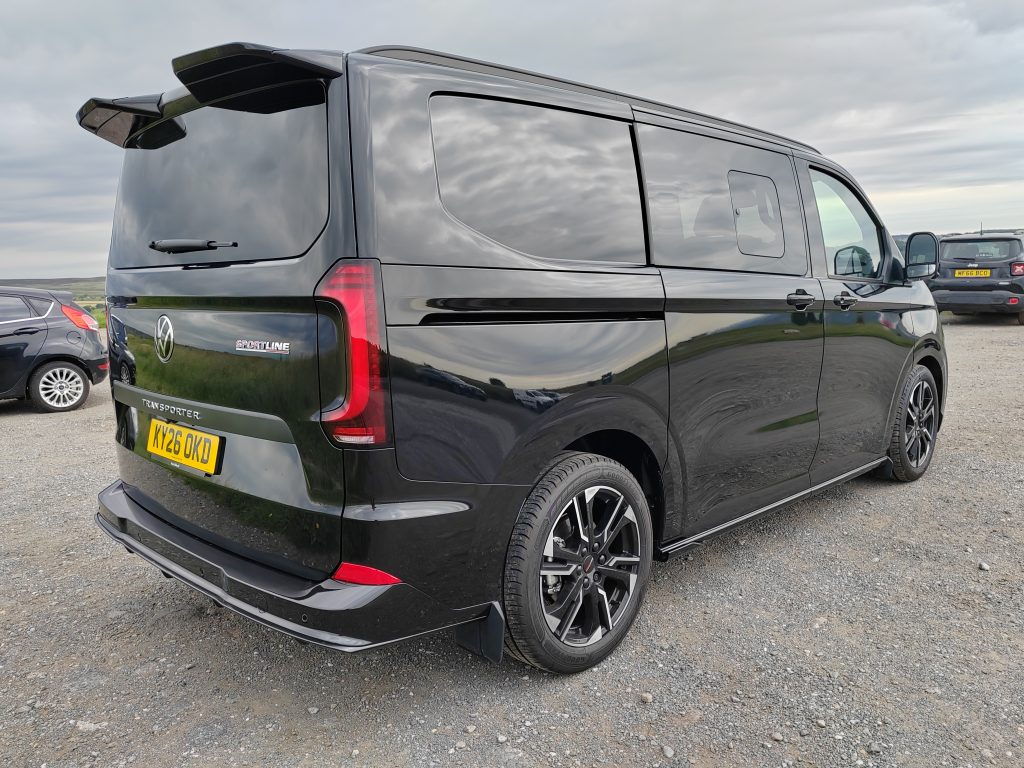
This van isn’t cheap. Sportline is loosely based on the otherwise, range topping Commerce Pro S model, but, comparing the equivalent to the test van, there’s a jump of £6200 on the list price at the time of writing. With an unashamed copy and paste from the manufacturers brochure, here are the ‘exclusive Sportline Styling enhancements’…
• 19″ premium diamond-cut alloy wheels with exclusive etched spoke detailing and Sportline centre caps
• ‘Eibach’ 29mm suspension lowering springs
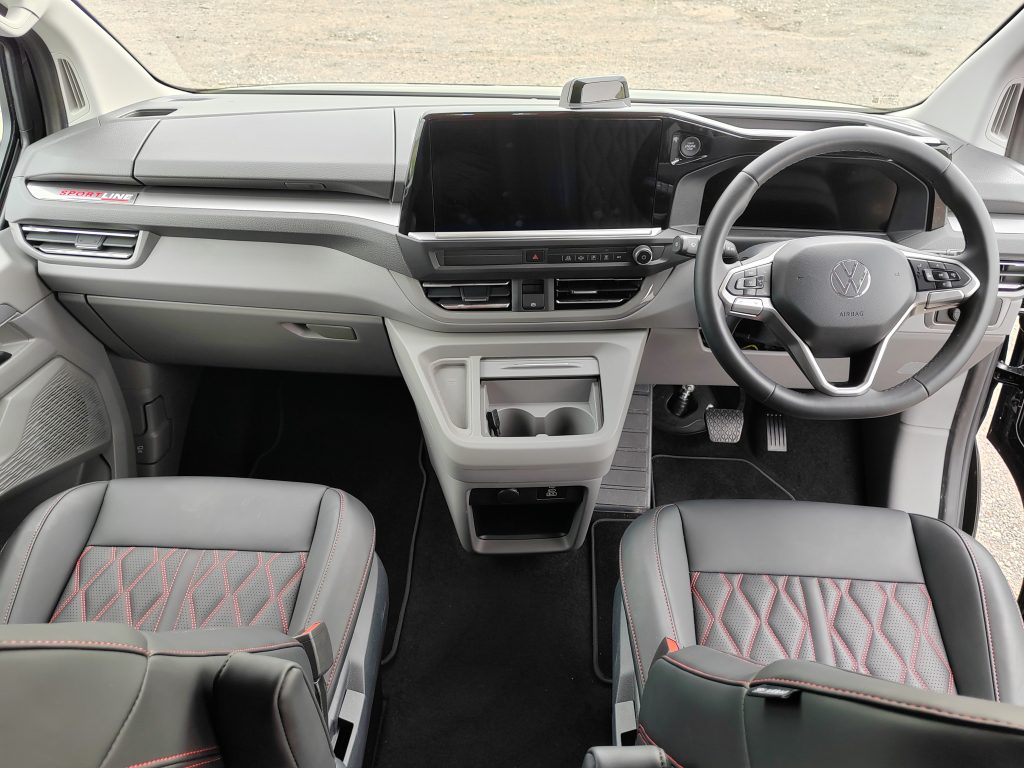
• Hand-crafted eco-leather sports seats with ‘Sportline’ embossing and red stitching
• Aggressive dogbone-style front bumper design
• Sculpted rear bumper
• Sport-profile rear spoiler with gloss black finish
• ‘Sportline’-branded gloss black mirror caps
• Gloss black grille with ‘Sportline’ signature red line
• ‘Sportline’ badging on rear tailgate
• Black roof rails
• Gloss black side skirts
• ‘Sportline’ carpet mat
The Kombi
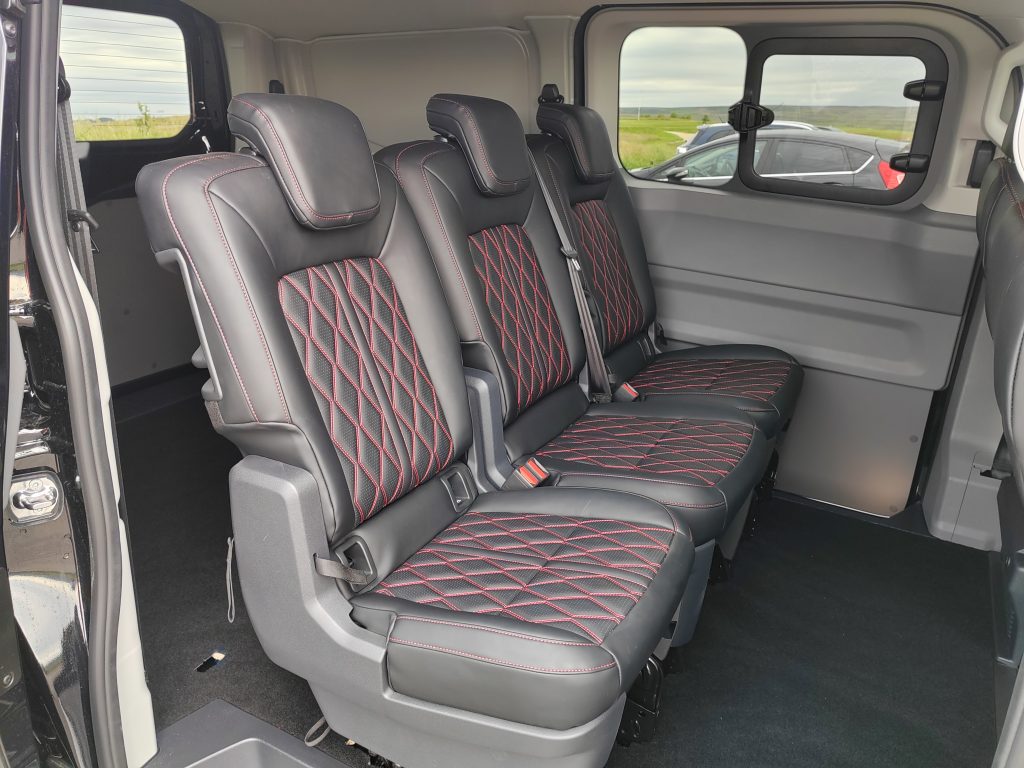
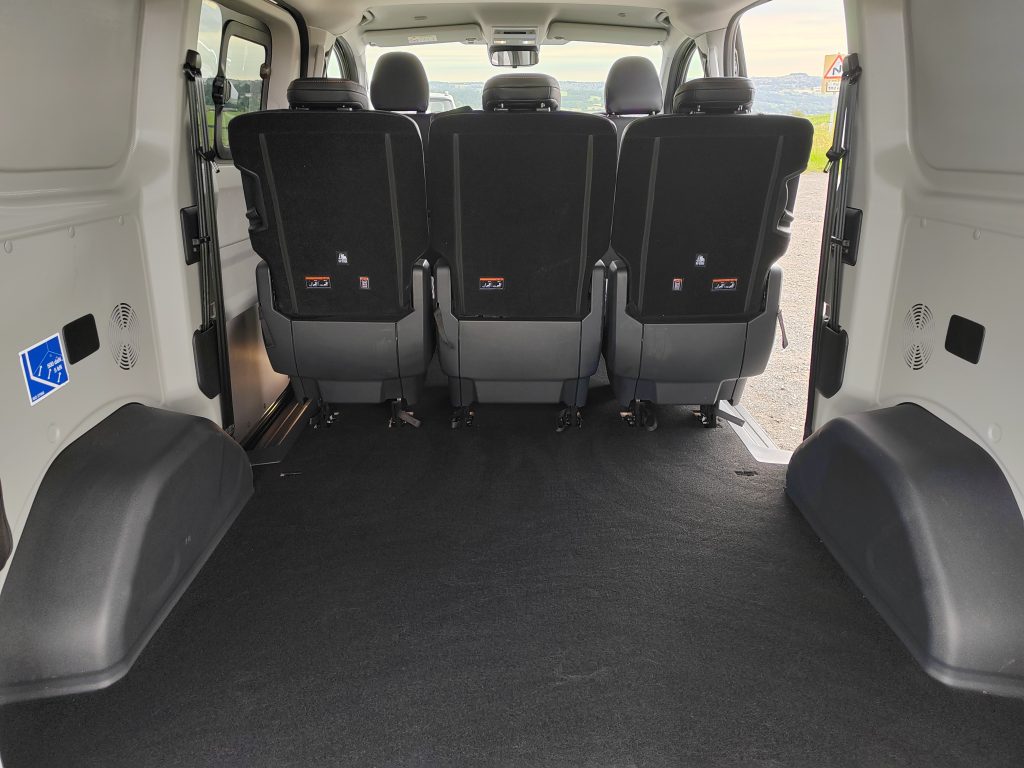
In the front area you’ve the driver and a single passenger seat, and the simple but ingenious flat cab floor allows for easy passage into the rear seating area, if you feel the need. The three rear seats are individual and removable, allowing for passengers to be substituted for load should the need occur. There’s plenty of legroom, and the glazed twin side doors allow for easy entry and exit. Those windows open, but only for minimal ventilation.
How does it look?
Looks will always be subjective but, it’s hard not to be impressed by the Sportline, both inside and out. The additional flourishes on the bodywork, the wheels and the Sportline badging (it’s even on the door mirrors) make this van a head turner. Where it falls down is that bland frontal aspect, mention of which is made in my previous review. Despite the Sportline additions (which do improve things) the Custom obliterates the Transporter in this area.
In the cab, the red stitched leather seats feel as good as they look and again, Sportline nomenclature is everywhere.
Practically speaking
Although many will buy the Kombi for leisure purposes, others will need it to work for a living. Some numbers? On the model tested (T32 SWB diesel) the payload is 995g, towing capacity 2500kg and, with the second row of seats removed there’s a load length of 2622mm on offer, reduced to 1632mm if you need those seats to be in place. As standard the Kombi has a rear tailgate, worth bearing in mind if you need to load from the rear.
This isn’t a panel van with extra seats, it’s a little more than that. So, for those carrying goods regularly, bear in mind the following. 1. There’s no bulkhead, so the back of the seats (or even the passengers) are subject to damage. 2. The load floor is carpeted. 3. The sides are trimmed in plastic. 4. There’s a full length headlining.
On the road
This is covered extensively in the previous review but, briefly – there’s an air of quality in this van, both in the cab and in it’s driving characteristics that no other medium van comes close to (apart from the Custom). It’s that good. Refined, quiet, and as my wife said after a long journey ‘it’s just like a car really, isn’t it?’. The 170PS engine and the 8-speed auto box work in harmony, making any journey a relaxed experience.
I’ll never miss an opportunity to criticise manufacturers for ditching mechanical heating and ventilation controls in favour of ones to be found (eventually) on the multimedia screen. This is borderline dangerous in my opinion. There. I’ve said it.
Cost of Ownership
Fuel consumption on the WLTP Combined test cycle comes in at a respectable but not earth shattering 34.4mpg but, Volkswagens killer blow to Ford comes in its 5+ aftersales package. This includes 5 services, 3 MOT tests and a 5 year / 124,000 mile warranty and 5 years roadside assistance. With Custom, there are no services or MOT’s included and, from a warranty perspective, you’re on your own after three years.
The Competition
Although most manufacturers now offer a high-end version of their products, the most obvious competitor is the Ford Transit Custom in MS-RT form. Check the specifications side by side but there are a lot of similarities. The Ford may not have that 5 year aftersales package, but it also doesn’t have that less than exciting frontal aspect… Prices are reasonably comparable, before delivery charges etc., the Sportline as tested is £53085 + VAT at the time of writing, the equivalent MS-RT Custom £56550. And, they are more closely related than you might think…